The Door Nobody Uses: How the Side Entrance Became the Real Heart of the American Luxury Home
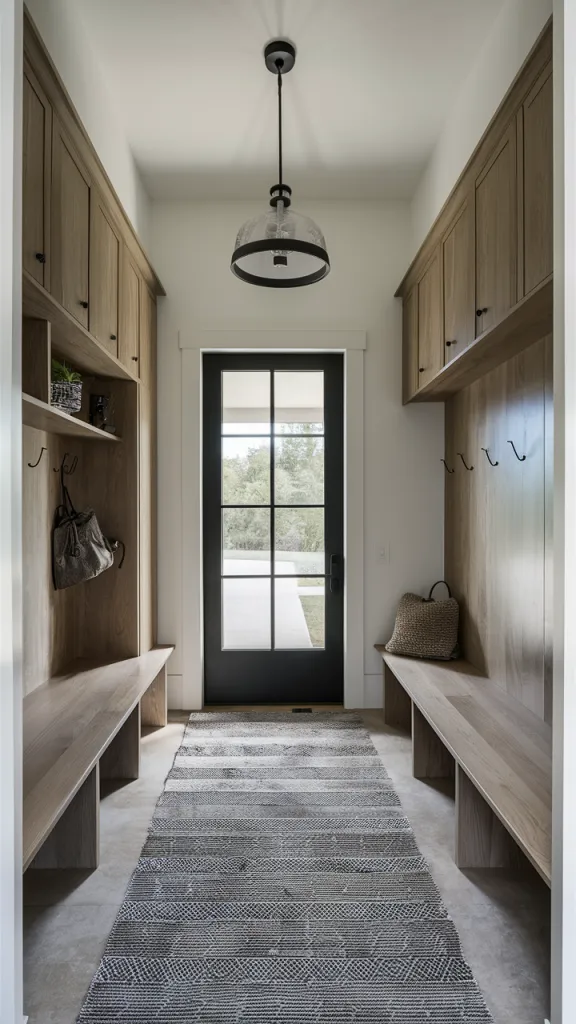
Photo: luxury home side entrance mudroom entry modern architecture, via vyleron.com
There is a peculiar ritual unfolding across America's most exclusive neighborhoods. Guests arrive at addresses worth eight figures, and the owners — rather than welcoming them through the sculpted oak front door — wave them around the side of the house. Past the planters. Through the gate. Into the mudroom.
The formal entry, so meticulously detailed in the brochure, has become what one New Canaan architect dryly calls "set dressing." The real architecture of arrival has moved elsewhere.
The Foyer as Facade
Ask any builder of high-end custom homes and they will confirm what floor plans quietly reveal: the ceremonial front door is used a handful of times a year. Thanksgiving. A graduation party. The realtor's photographer.
"We still design the front entry with full commitment — stone thresholds, custom hardware, the works," says a principal at a Denver-based residential firm. "But we've stopped pretending it's where life happens. Our clients come home through the garage, drop their bags in the mudroom, and never see the foyer until company arrives."
This isn't neglect. It's a genuine architectural repositioning. The everyday entrance has absorbed the functions that once belonged to the front of house — greeting, transition, storage, even ceremony — and it now commands a disproportionate share of both square footage and budget.
Where the Budget Actually Goes
Walk through a recently completed luxury build in Austin or Scottsdale and the evidence is unmistakable. The mudroom — once a utilitarian afterthought tucked behind the kitchen — has become a showpiece in its own right. Custom white oak lockers with integrated charging drawers. Stone flooring heated against winter mornings. A dedicated dog-washing station. Bench seating upholstered to match the living room.
Builders report that spending on these secondary entries has climbed sharply over the past five years, in some projects rivaling the formal foyer line item. The reasoning is simple economics: a client uses the side door three hundred sixty-five days a year and the front door perhaps ten.
The motor court has undergone a parallel elevation. In homes arranged around a courtyard arrival, the door from the motor court into the house is frequently the most detailed threshold on the property — glazed steel, travertine paving, a covered portico with lighting designed for evening arrivals. It is, functionally, the front door.
The Floor Plan Follows the Foot Traffic
The consequences ripple deep into the plan. Architects increasingly orient the entire service spine — garage, mudroom, pantry, laundry — as a connected sequence, so that a family entering from the car can move from vehicle to kitchen without crossing a single formal space.
Some firms have formalized this as a distinct circulation zone, complete with its own name on the drawing set. Others describe it more plainly: the family axis. Either way, it has changed the geometry of the American luxury home. Kitchens have drifted closer to the garage. Powder rooms have migrated to serve the side entrance. Coat storage that once lived in the foyer now lives where coats are actually shed.
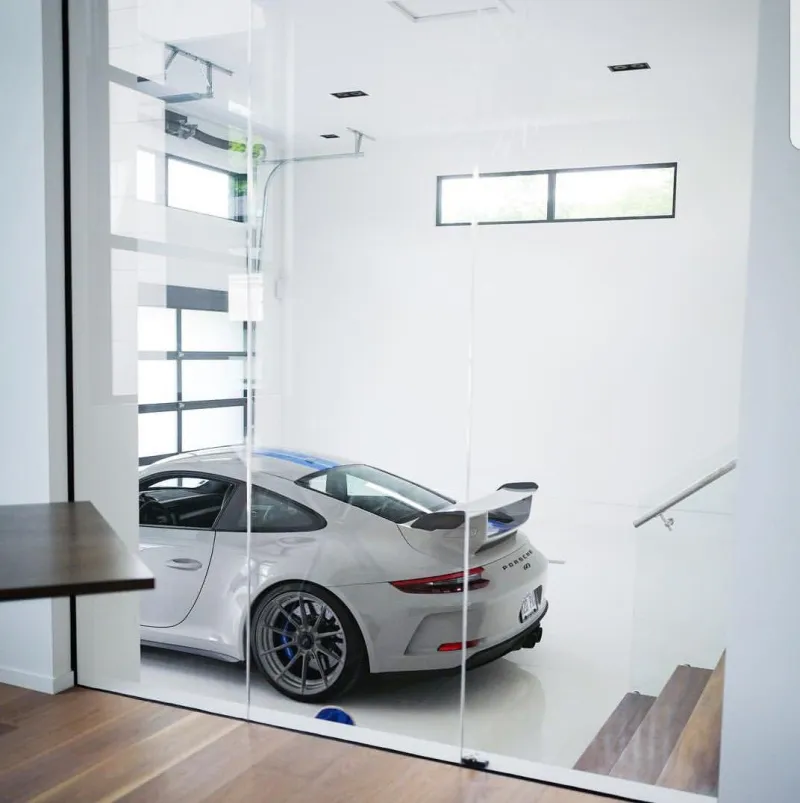
Even the golf simulator has joined the procession. In a growing number of properties, the passage from the garage or simulator wing into the main house is treated as a designed moment — a glazed connector, a gallery of framed photography — acknowledging that this is how the homeowner will actually move through the day.
A Quiet Philosophy of Arrival
There is a broader idea at work here, and it says something about how affluent Americans now think about their homes. The formal front door was built for the gaze of visitors. The side entrance is built for the life of the household. One is theater; the other is routine.
Some designers frame it as a return to older patterns — the servants' entrance, the kitchen door, the tradesman's side of the historic American house — minus the hierarchy. Everyone, including the owners, now comes in through the working door, because the working door has been made beautiful.
The grand foyer, meanwhile, is not dying. It is simply being freed from duty. Unburdened of backpacks and grocery bags, it can return to what it was always meant to be: a statement, held in reserve, ready for the occasions when a first impression is the entire point.
The rest of the year, the most important door in the house is the one around the side. And increasingly, it looks the part.