Behind the Marble, a Second Kitchen: How the Catering Kitchen Became Luxury's Backstage Necessity
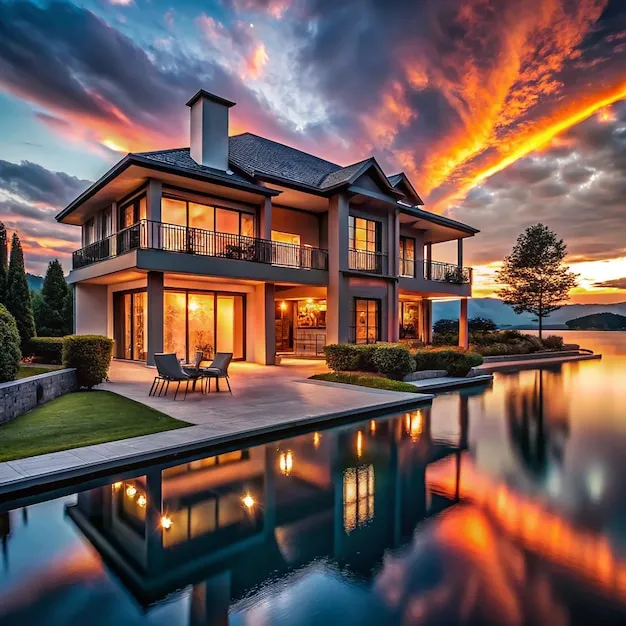
Photo: luxury home secondary catering kitchen stainless steel commercial appliances, via img.freepik.com
The photograph every buyer remembers is the one on the listing: twenty feet of veined marble, twin islands, a range that resembles industrial sculpture. What the photograph omits is the door beside the pantry — unmarked, often unlabeled, leading to a room that may matter more to the home's function than anything on display.
Inside that room: a second full suite of appliances, stainless steel counters, a floor drain, commercial-grade ventilation, and no windows at all. This is the catering kitchen, known in trade shorthand as the dirty kitchen, and over the past five years it has migrated from the occasional custom commission to a near-obligatory line item in the American luxury program.
The Kitchen Behind the Kitchen
The concept is hardly new. Service wings and sculleries were fixtures of Gilded Age estates, and European country houses never abandoned them. What changed in the American market is the expectation. Builders in Greenwich, Palm Beach, Aspen, and the enclave neighborhoods of Los Angeles and Dallas now report that buyers of homes above roughly $8 million assume a secondary kitchen the way they assume a primary suite on the main floor.
The logic follows directly from how these households actually operate. The show kitchen — the one with the plaster hood, the waterfall island, the view — is a stage set. It exists to be seen, photographed, and lightly used. Real cooking, particularly the volume and intensity of event catering, is hot, greasy, loud, and logistically messy. A single dinner party for forty can generate more traffic, trash, and steam than a family kitchen sees in a month. Routing that through the marble showpiece would be functionally punishing and aesthetically ruinous.
So the work moved backstage. The catering kitchen is the green room; the chef's kitchen is the lobby.
What It Takes to Build One
Architects and builders describe a fairly consistent spec. Square footage typically runs between 150 and 400, positioned to allow discreet access from the service entrance, garage, or a side corridor — echoing the separate-service-door logic that has quietly reshaped luxury floor plans in recent years. Finishes are deliberately utilitarian: commercial stainless surfaces, sealed floors, washable walls.
The equipment list is where budgets balloon. A second dishwasher and a second refrigerator are baseline. Many clients add a double or triple stack of convection ovens, a six-burner range independent of the show kitchen, reach-in refrigeration, and dedicated circuits capable of supporting it all simultaneously. In jurisdictions that have adopted increasingly strict commercial cooking codes, a full hood suppression system may be required once the equipment crosses certain thresholds — a line item that alone can add five figures.
All told, builders commonly quote a finished catering kitchen between $75,000 and $250,000, with the upper end approaching small commercial installations. In the context of a $15 million build, it is rounding error. In the context of a renovation, it is often the single most expensive room per square foot in the house.
The Staffing Subtext
What the room ultimately encodes is a relationship — between the family, the people who cook for them, and the events they host. Households that employ a private chef or run frequent catered functions treat the space as a genuine workplace, often specifying it with input from the chef who will use it. Sightlines matter less than flow: a direct path to the service entry, to the dumbwaiter or back stair, to the dish room.
For homes that host only occasional events, the room earns its keep differently. Caterers arriving with trays and warming equipment no longer wheel through the front hall. Prep chaos, packaging overflow, and the aftermath of a hundred canapés are contained and cleared before the first guest crosses the threshold. The hosts appear effortless; the effort has simply been given an address of its own.
There is also a quieter status dimension at work. The visible chef's kitchen signals taste. The hidden one signals scale — an implicit acknowledgment that the household entertains at a volume where a single kitchen is insufficient. In a market where buyers have grown fluent in reading a floor plan for clues about how a house is meant to be lived in, the presence of a back-of-house kitchen is itself a form of messaging.
The Design Question
The current challenge for architects is that the utilitarian room has begun to attract its own ambitions. Some clients now request a finished catering kitchen — tiled in the same stone as the show kitchen, fitted with the same hardware — on the theory that staff and guests alike deserve a considered environment. Others push the opposite direction, insisting the room remain aggressively plain so that the distinction between front and back of house stays legible.
The most successful projects, practitioners say, resolve the tension the way good service always has: invisible in operation, thoughtful in detail. Drainage where it is needed. Lighting that does not cast shadows on a cutting board. A door that closes softly.
The American luxury home has spent a decade turning every functional space into a showpiece — the garage, the pantry, the basement, the ceiling. The catering kitchen represents a rare reversal: a space designed, deliberately, to be left out of the picture. Behind the marble, the real work happens in a room without a window. For the buyers commissioning them, that may be the most convincing detail in the whole house.