The Sound of Silence: Inside the Acoustic Arms Race Reshaping Luxury Homes
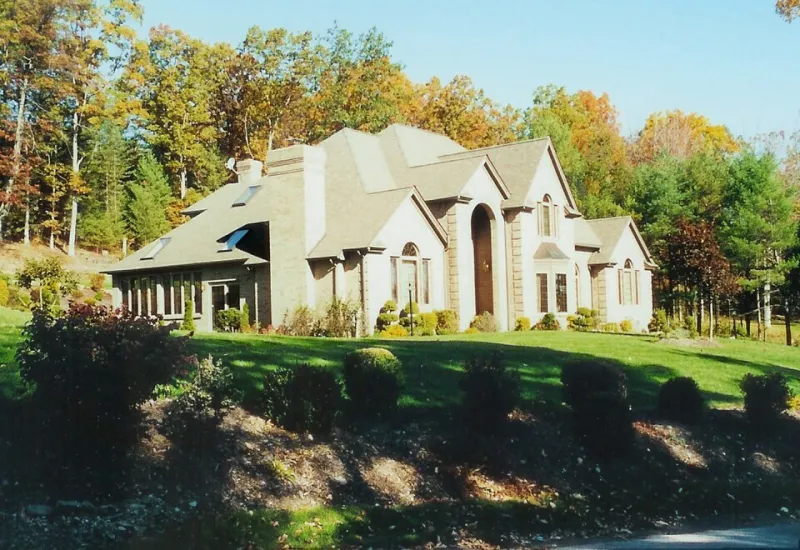
Photo: No machine-readable author provided. Stilfehler assumed (based on copyright claims)., Public domain, via Wikimedia Commons
In a Manhattan high-rise overlooking Central Park, a family of four recently paid to have their library walls rebuilt twice. The first construction was flawless—book-matched walnut, hidden lighting, millwork to the ceiling. The problem was what could be heard through it: the elevator shaft, three feet away, announcing itself every ninety seconds.
The second build included mass-loaded vinyl, resilient channel framing, and a sealed acoustic door that cost more than a family sedan. The walnut went back up. The elevator went silent.
This is the quiet economy of today's luxury housing market, and it is growing louder by the year.
When Silence Became a Status Symbol
For decades, the markers of an expensive home were visual: square footage, stone countertops, a view worth photographing. But a shift is underway among America's affluent buyers. Having secured the beautiful, they are now pursuing the imperceptible—rooms engineered not to look a certain way, but to sound a certain way. Namely, like nothing at all.
Acoustic consultants, once reserved for concert halls and recording studios, now find themselves on residential job sites from Aspen to Palm Beach. Their briefs have expanded accordingly. Yes, the home theater still needs isolation. But so does the nursery adjacent to the great room, the home office sharing a wall with a teenager's drum kit, and increasingly, the meditation wing—a phrase that has migrated from wellness brochures into architectural programs.
The psychology is not hard to parse. Wealth buys escape from noise in most forms: you can leave the city, gate the driveway, hire the staff. But sound is stubborn. It travels through steel, glass, and concrete, indifferent to the price of the real estate carrying it. Engineering it away is one of the few remaining problems money genuinely struggles to solve quickly—precisely why it has become a differentiator.
The Anatomy of a Silent Room
True acoustic architecture is more than hanging a few felt panels and calling it done. High-end practitioners approach it in layers, and the vocabulary is worth learning before you write a check.
Decoupling is the foundation. Sound travels structurally, so premium builds separate wall faces with resilient channels or staggered studs, preventing vibrations from walking straight through the frame. Mass follows: double layers of drywall, sometimes with viscoelastic damping compounds sandwiched between. Absorption handles what remains—perforated wood panels, fabric-wrapped fiberglass, and the slatted timber ceilings that have become something of a signature in Pacific Northwest modernism.
The final layer is the one buyers forget until it fails: flanking paths. Sound, like water, finds the unsealed gap. Outlets back-to-back on a shared wall, recessed lighting cans, and standard hollow-core doors all undermine five-figure wall assemblies. In serious builds, every penetration is gasketed, every door is solid-core with drop seals, and every return-air duct gets an acoustic lined run.
Done properly, the result is a room that measures in the STC 60-plus range—where a shouting conversation next door registers as a murmur. Done carelessly, it is a $40,000 lesson in why the door was never just a door.
From Media Rooms to Meditation Wings
The programmatic requests tell their own story about how affluent Americans live now.
Media rooms remain the classic entry point, and the engineering is well understood: floating floors, isolated ceilings, and a sealed envelope that keeps explosions inside the room and the rest of the house oblivious. But the newer commissions skew personal rather than social. Wellness suites—meditation rooms, yoga studios, sound-bath spaces—demand the opposite acoustic character. A home theater wants absorption to kill echoes; a meditation room wants a hushed, anechoic stillness that some designers describe as the interior equivalent of a snowfall.
Then there is the least glamorous and most requested project in the category: the mechanical chase. In luxury builds, the true test of acoustic ambition is whether a homeowner can stand in a primary bedroom and hear nothing from the HVAC, the pool equipment, or the wine cellar compressor humming below. Increasingly, the answer is expected to be nothing at all.
What It Means for Property Value
For all its intangibility, acoustic quality is beginning to register in the market. Brokers in dense metros report that sound isolation has become a talking point in listings—particularly for townhouses and shared-wall product, where the fear of neighbor noise suppresses prices more than any cosmetic deficiency. A documented, professionally engineered acoustic package reads like a home's mechanical systems: invisible when present, deal-breaking when absent.
Appraisers remain formally agnostic—there is no line item for STC ratings—yet the practical math is straightforward. A buyer comparing two otherwise identical penthouses will pay for the one where they cannot hear the elevator. Developers have noticed; several high-end multifamily projects now market their party-wall assemblies the way others market Sub-Zero packages.
The broader lesson for anyone building or renovating at the top of the market: plan for silence early. Acoustic retrofits are possible but costly, and the best results come from assemblies designed in from the first framing meeting, not bolted on after the first sleepless night.
Luxury, it turns out, is not only what a house shows you. Increasingly, at the highest level of American residential design, it is what a house refuses to let you hear.