Next Door, Please: How Compound Living Is Redrawing the Map of American Wealth
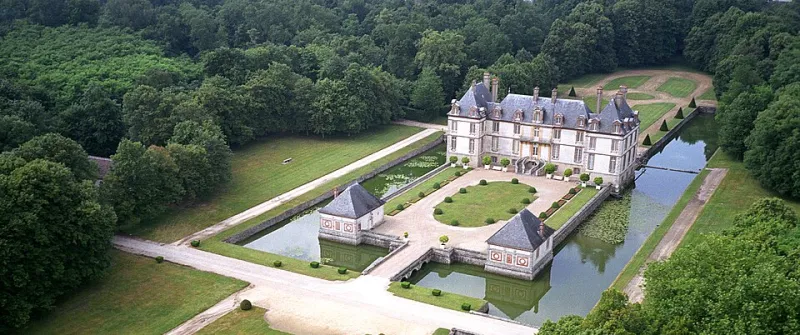
Photo: Château de Bourron, CC BY-SA 3.0, via Wikimedia Commons
The most significant purchase many wealthy Americans will make this year will not be the primary residence. It will be the property beside it.
In enclaves from Montecito to Palm Beach, from the Hamptons to the hills above Los Angeles, a pattern has emerged with striking consistency: the adjacent parcel, often acquired quietly and sometimes at a premium that defies appraisal logic, is folded into the original holding. The result is the modern compound — a private ecosystem of main house, guest quarters, and ancillary structures that no longer resembles a neighborhood so much as a carefully composed estate.
The Compound as a Century-Old Idea, Reborn
Compound living is not new. The great American estates of the Gilded Age — the Breakers, Biltmore, the vast summer cottages of Newport — were never single structures. They were aggregations: carriage houses, conservatories, servants' wings, gate lodges. What has changed is the scale and the buyer. Today's compound is less likely to be a forty-room manor than a cluster of architecturally distinct buildings arranged around privacy, family, and flexibility.
The catalyst is demographic. The postwar model of a household that disperses — children to distant cities, parents to assisted living — has run into the realities of the last decade. Multi-generational living has surged, but among the affluent it rarely means sharing a roof. It means sharing an address in the loosest sense: separate structures, separate entrances, one shared philosophy of proximity without intimacy. The grown son gets the cottage. The parents get the pool house, thoughtfully converted and medically outfitted. The estate manager gets a discreet unit near the service drive.
The Premium of Proximity
What fascinates the market is not the trend itself but its economics. When a homeowner in a tight inventory market decides the house next door must be theirs, standard valuation frameworks collapse. Comparable sales become irrelevant when the buyer is not purchasing the house but the adjacency.
Brokers in markets like Aspen, Nantucket, and Santa Barbara describe quiet premiums — buyers paying 20, 30, sometimes 50 percent over asking for a property that, on paper, makes no sense. It makes sense only in relation to the parcel next to it. Appraisers struggle; sellers, once they understand the dynamic, hold firm. In some cases the second purchase costs more than the first, a reversal that would have been unthinkable a generation ago.
This has a knock-on effect on land value throughout an enclave. Once one buyer demonstrates that adjacency is a commodity, every neighbor becomes a potential seller at a repositioned price. Rural acreage behaves differently — there, assembling a compound is a matter of negotiation with a handful of owners. In established neighborhoods, the compound is won one transaction at a time, sometimes over a decade.
Zoning, and the Quiet Politics of Assemblage
The compound raises questions that planning departments are only beginning to confront. Many American jurisdictions, particularly in the Northeast, carry legacy regulations — minimum lot sizes, accessory dwelling restrictions, subdivision controls — that were designed to prevent exactly this kind of assemblage. Others, facing housing shortages, have loosened ADU rules in ways that inadvertently smooth the compound builder's path.
The result is a patchwork. In parts of California, combining two lots is a routine lot-line adjustment. In certain Connecticut towns, conservation commissions, wetland setbacks, and historic district reviews can stretch the process across years. Attorneys who specialize in land use now describe a boutique practice: representing high-net-worth clients in assemblage strategies that look, from the outside, like ordinary residential purchases.
There is a civic dimension, too. When one family controls multiple properties in a small municipality, the tax base, the school enrollment figures, and even the character of a street shift. Some towns have responded with occupancy rules and short-term rental restrictions aimed squarely at the underused second dwelling. The compound, for all its privacy, has become a matter of public record and public debate.
Redefining the Estate in 2025
The word 'estate' has migrated. It once connoted acreage — the hunt-country property in Virginia horse country, the ranch in Montana. Today, the estate can be three modest houses on a quarter-acre each in a beach town, held under an LLC, united by a shared motor court and a common landscape plan.
Architects describe the brief changing accordingly. Clients no longer ask for one impressive house; they ask for a master plan. Circulation, sightlines, and service routes are designed across multiple structures. The garden becomes the connective tissue — the true front door of the compound. Interior design follows suit, with a shared material palette and a deliberate visual continuity that makes separate buildings read as one composition.
Perhaps the most telling shift is motivational. Buyers cite privacy, yes, and family logistics. But the deeper impulse, brokers say, is control — over noise, over views, over who arrives and when. In a market where the finest homes are already extraordinary, the last scarce commodity is the neighborhood itself. The wealthiest buyers have simply concluded that if you cannot control what happens next door, you can, at a price, own it.
The house next door was once the least interesting property on the street. In 2025, it may be the most strategic.